Purpose & Description
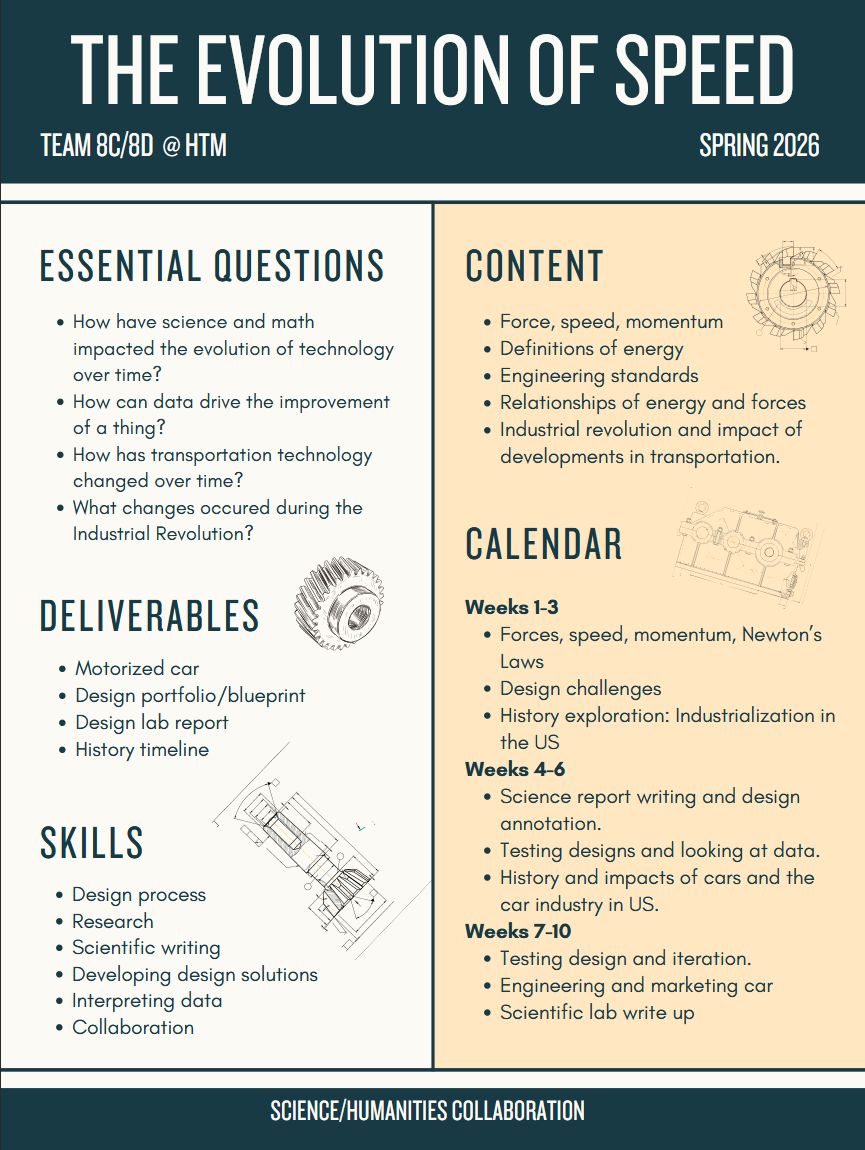
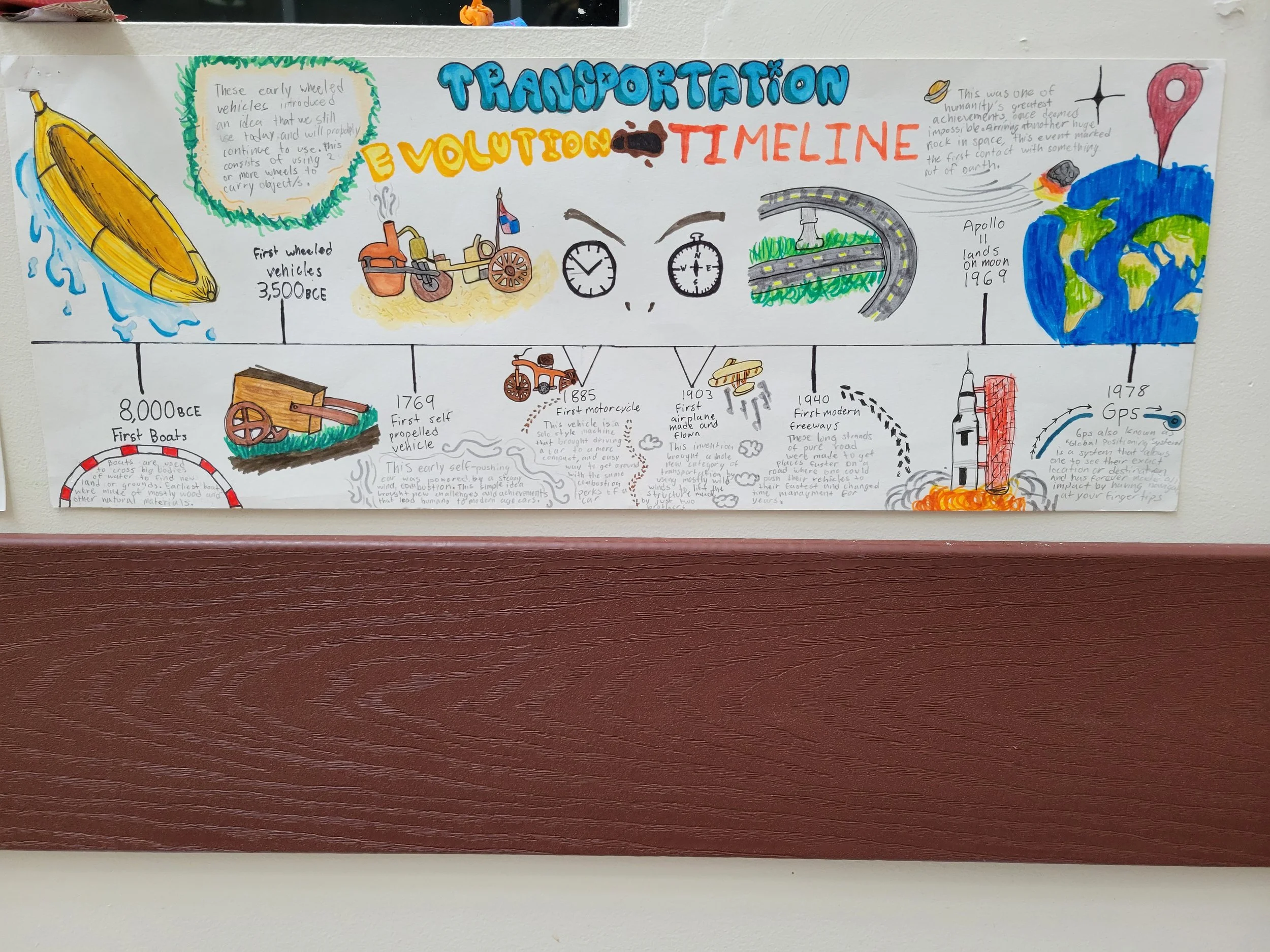
The purpose of this learning experience was to engage students in a hands-on exploration of the evolution of car technology through the lens of science, history, and math. By designing and iterating their own car models, students actively applied principles of physics to real-world challenges. This project fostered student growth through self-directed learning, critical thinking, and problem-solving, analyzing data, reflecting on feedback, and collaboratively refining their designs with their engineering groups. Through this immersive process, students were able to deepen their understanding of technological advancements, meanwhile developing their perspective on the science, engineering, and history of cars & transportation.
The Process
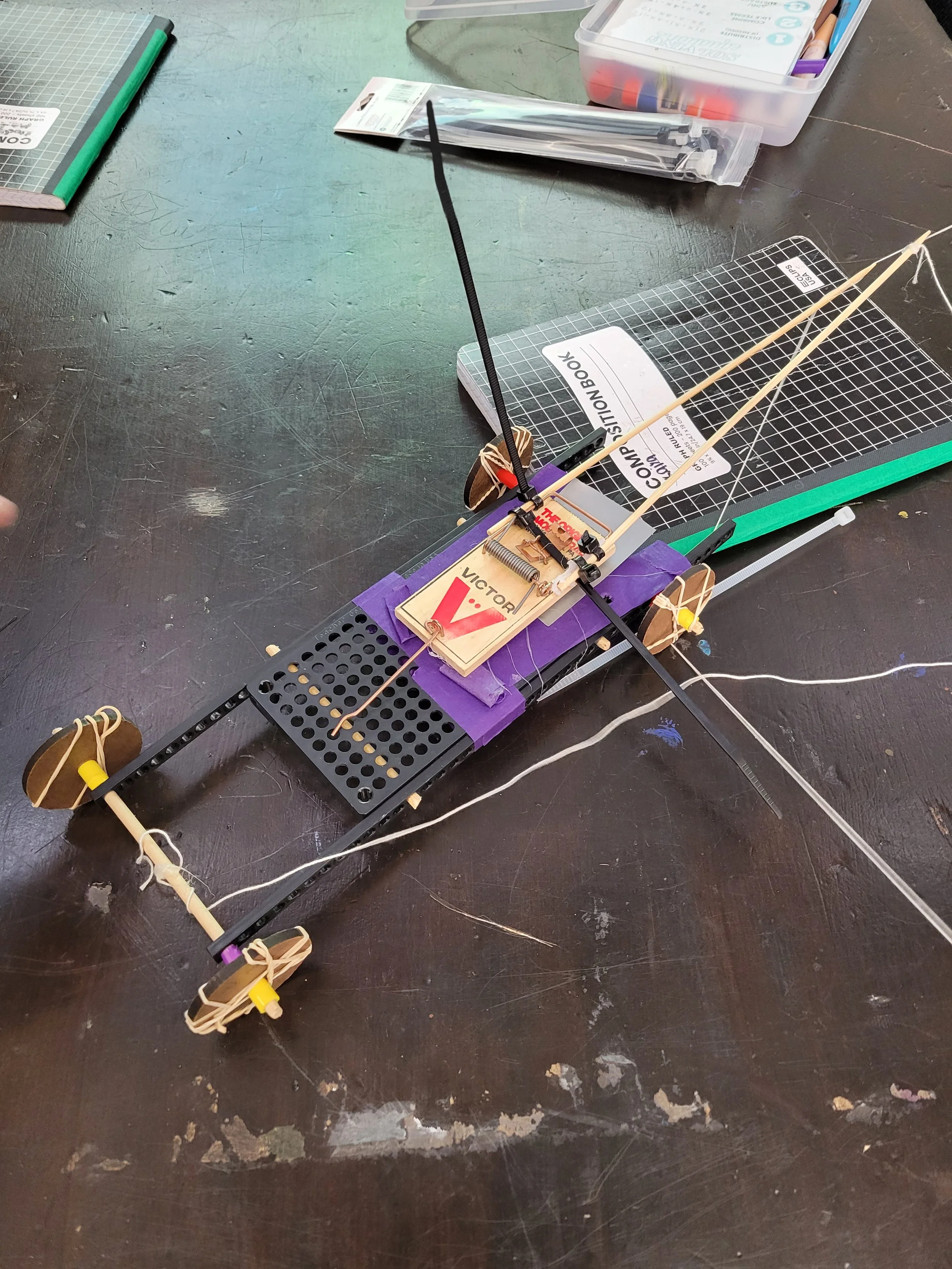
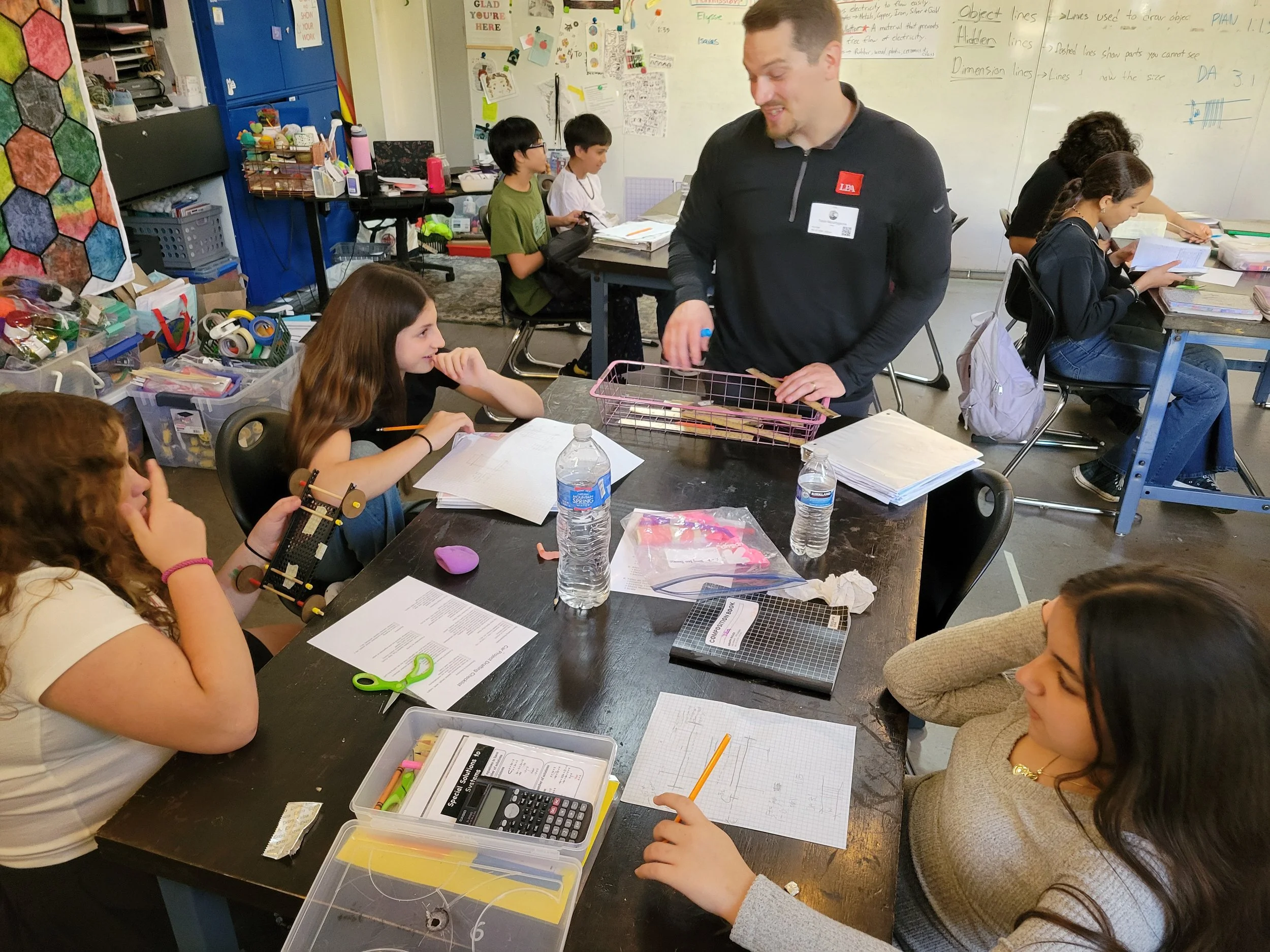
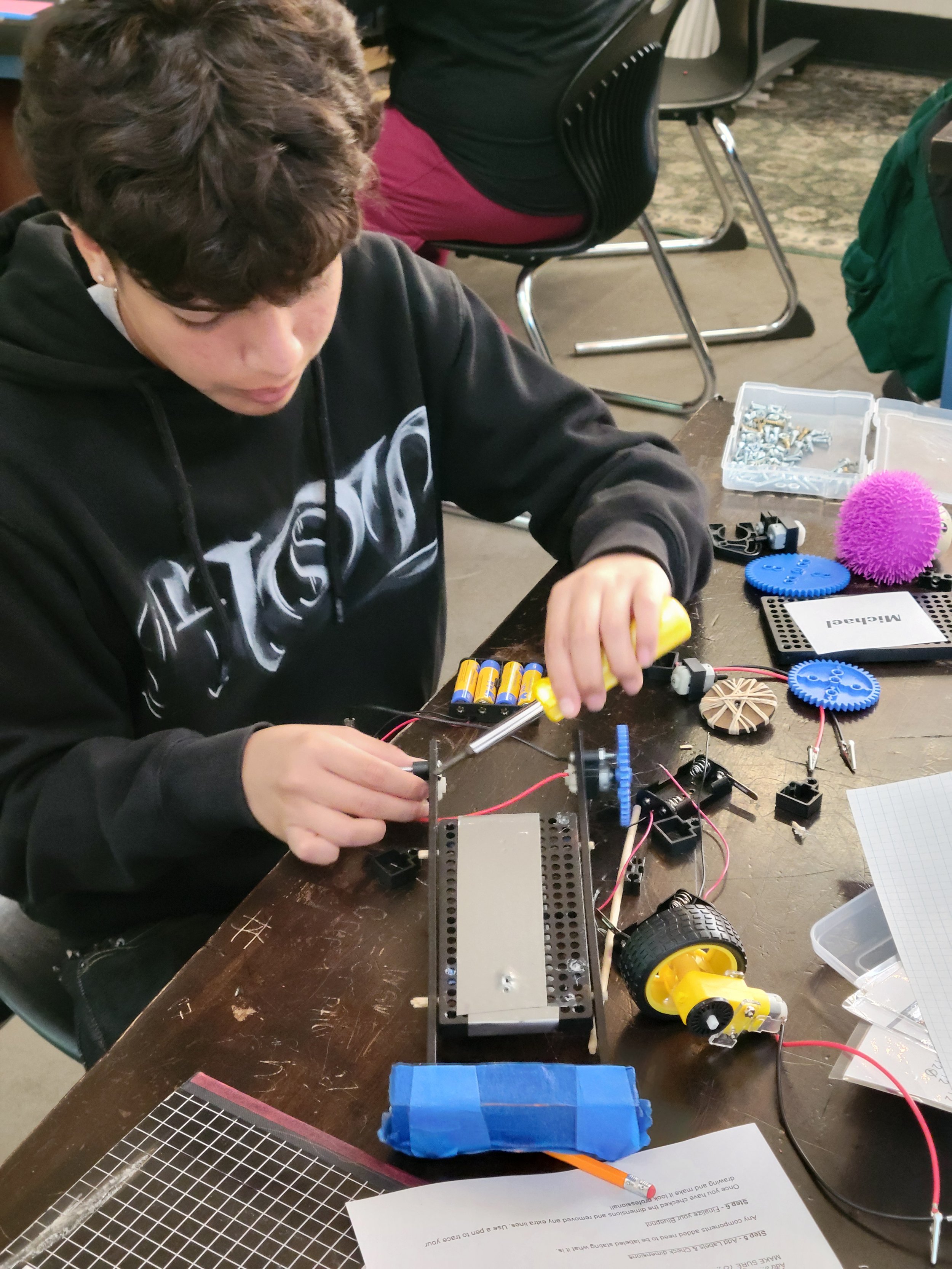
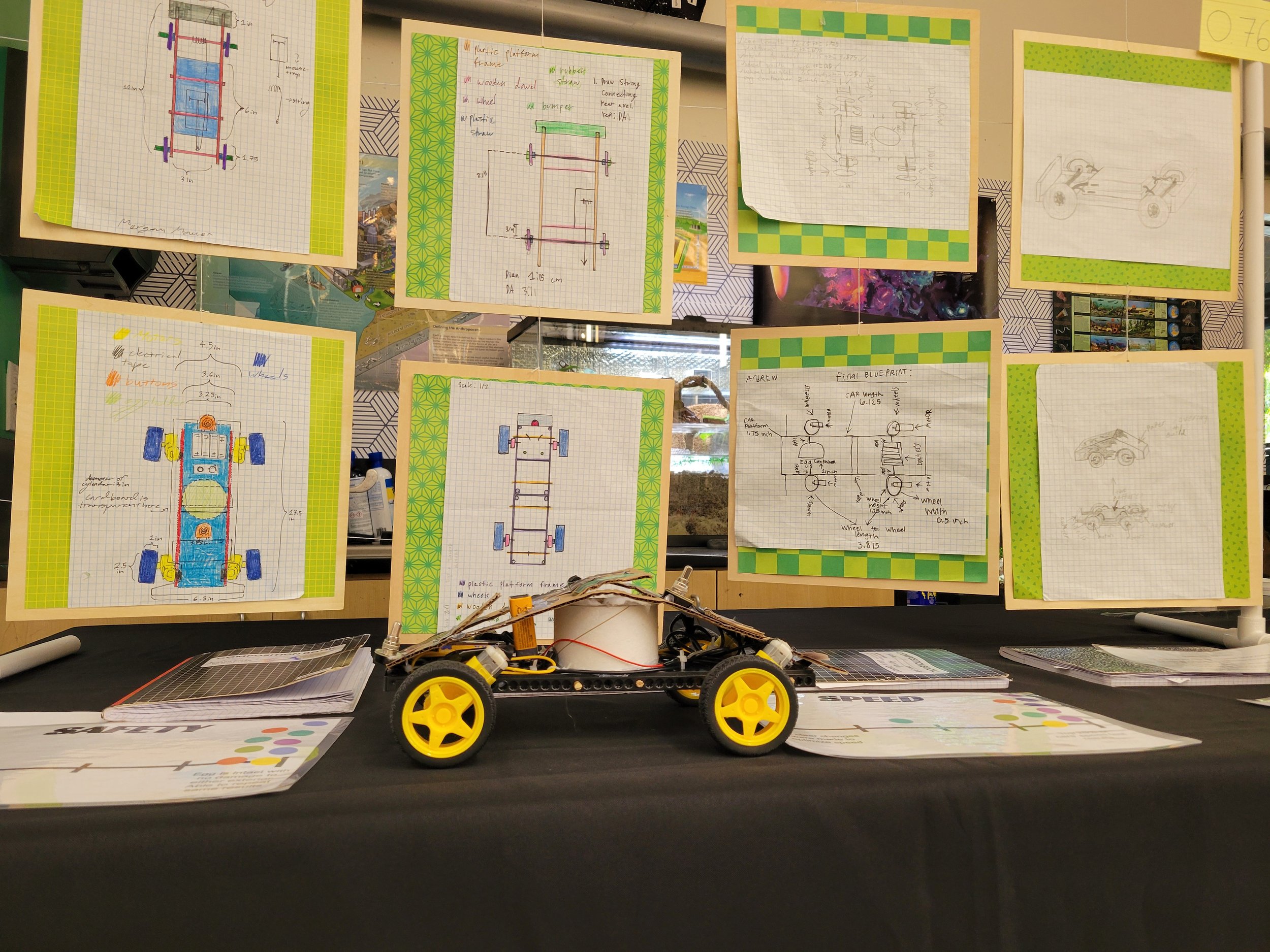
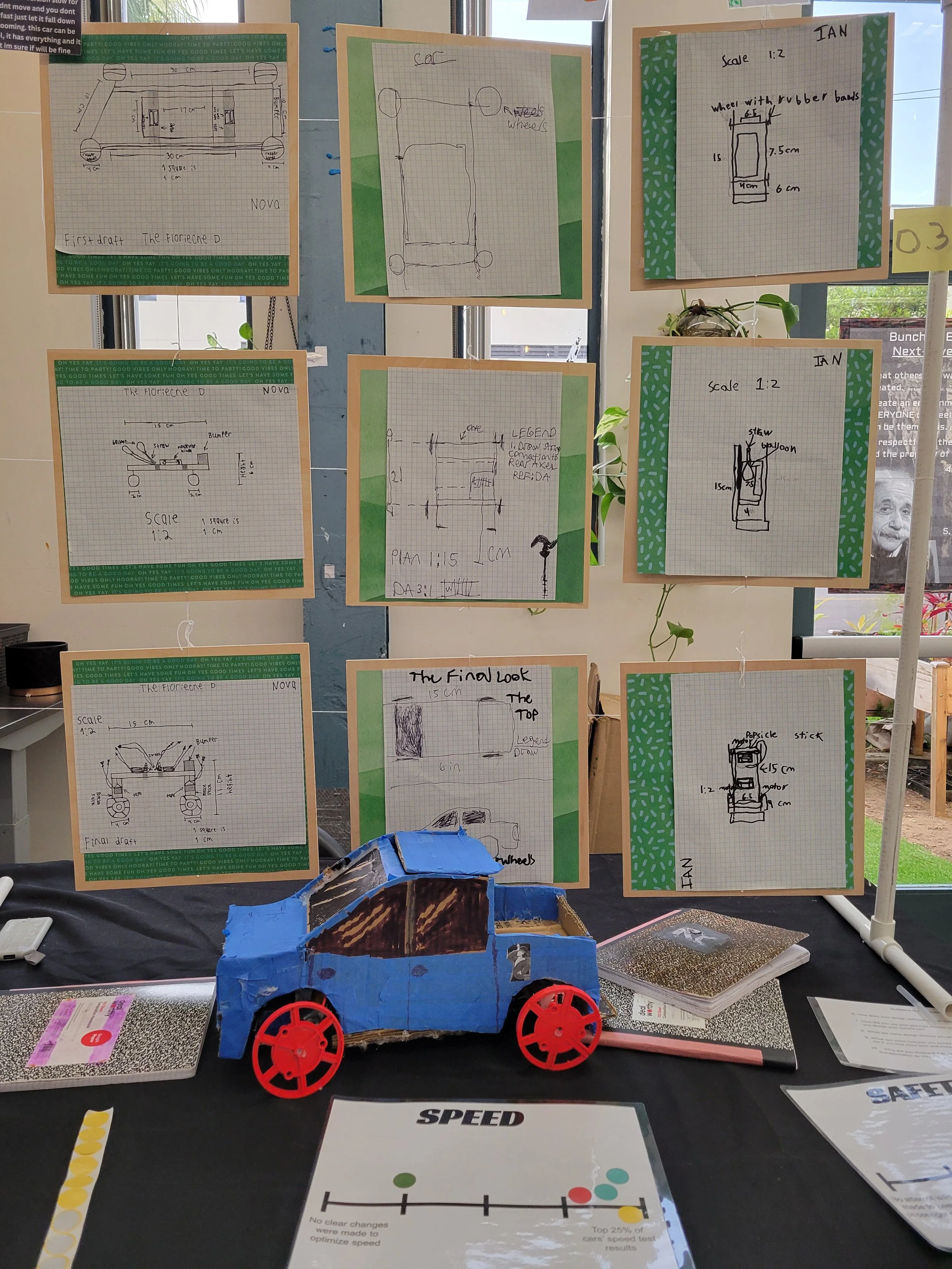
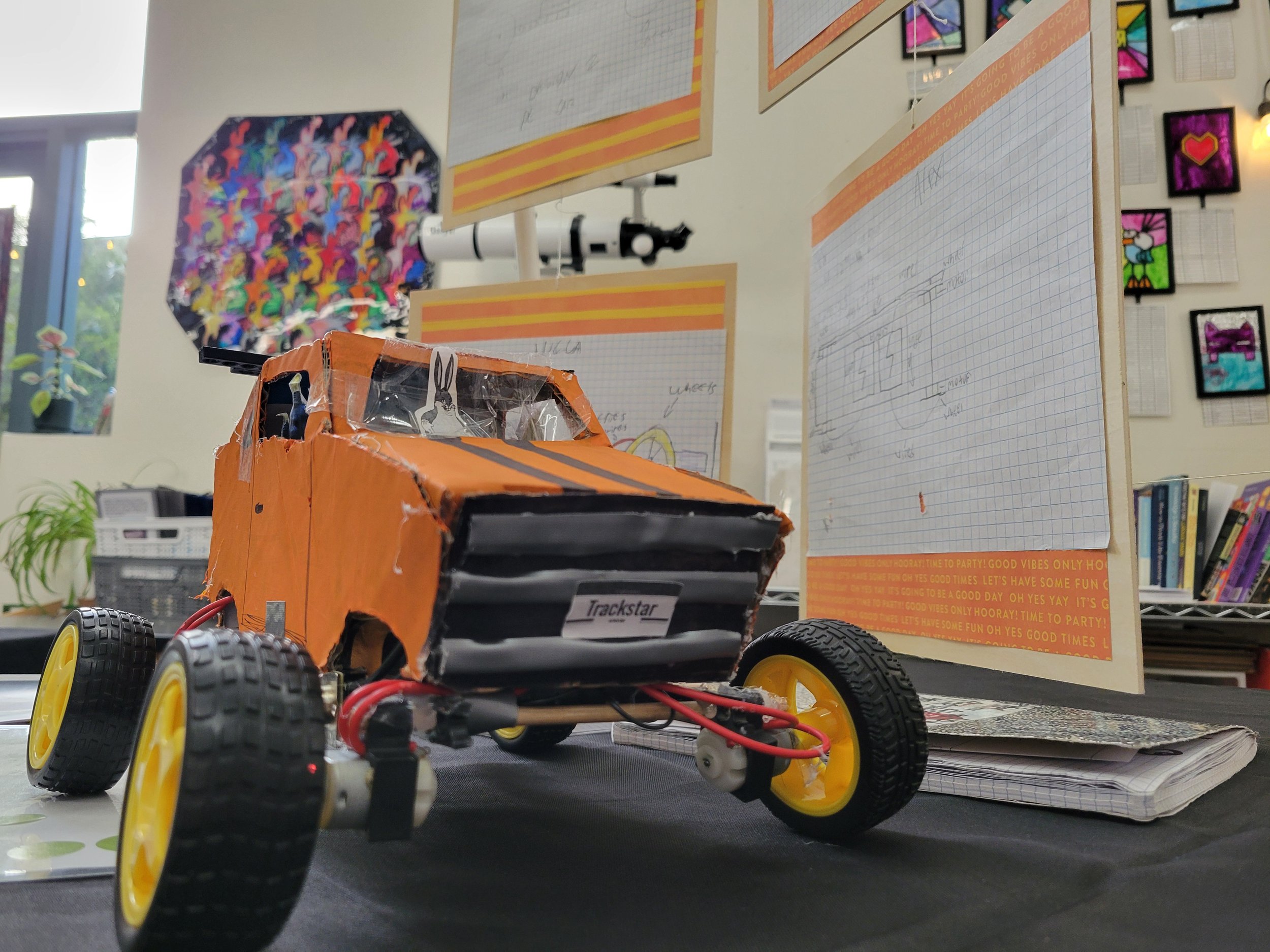
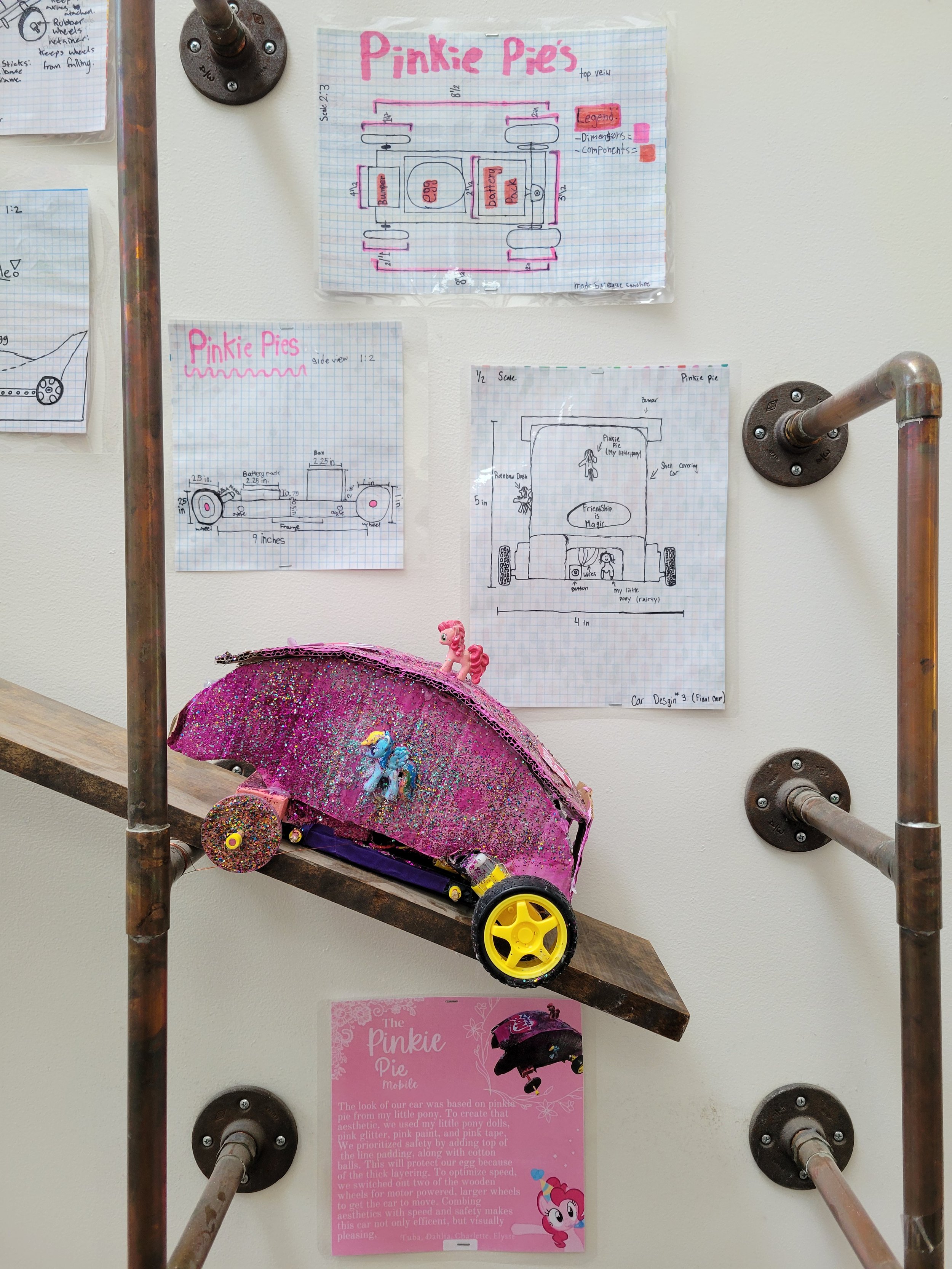
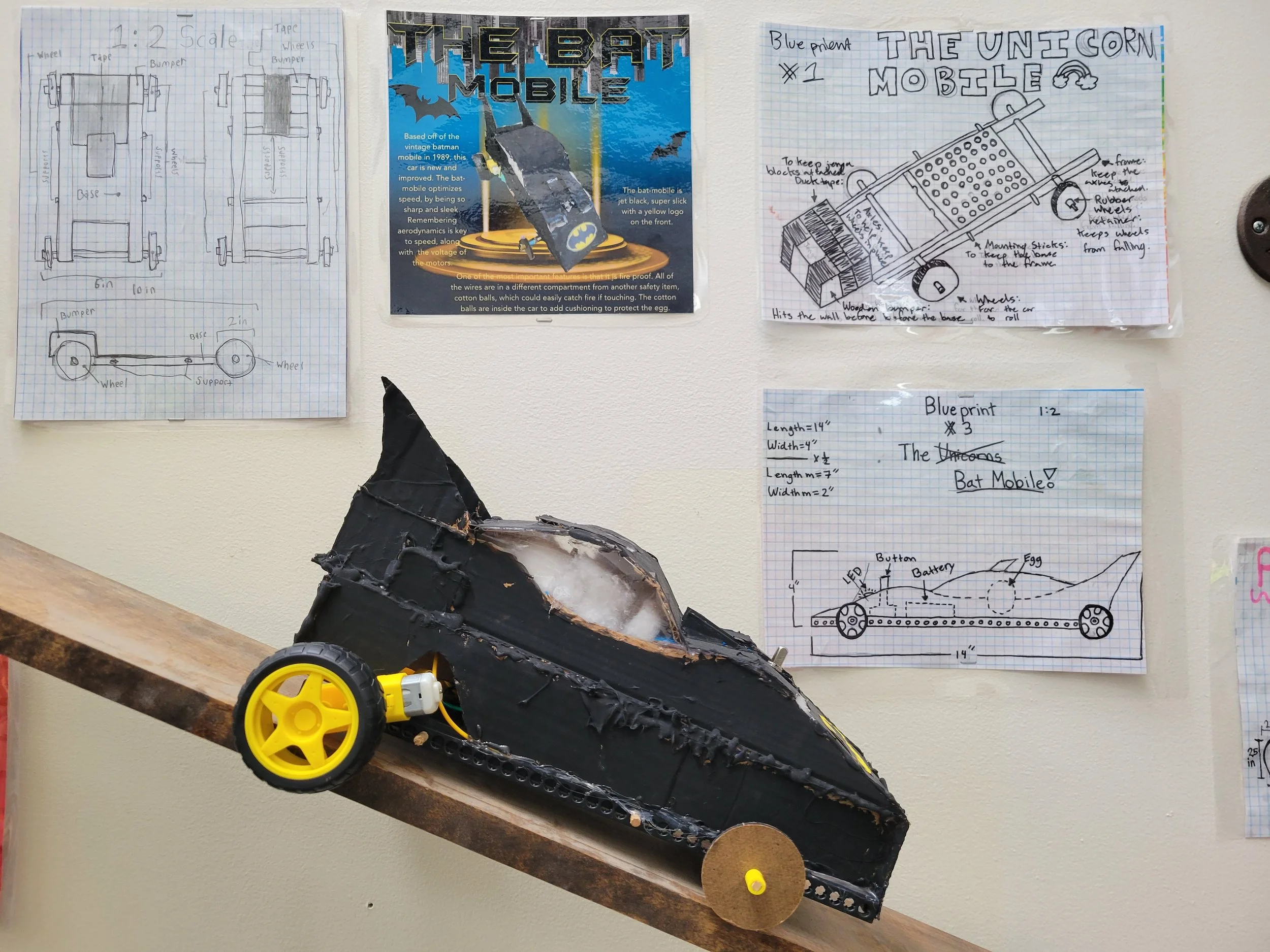
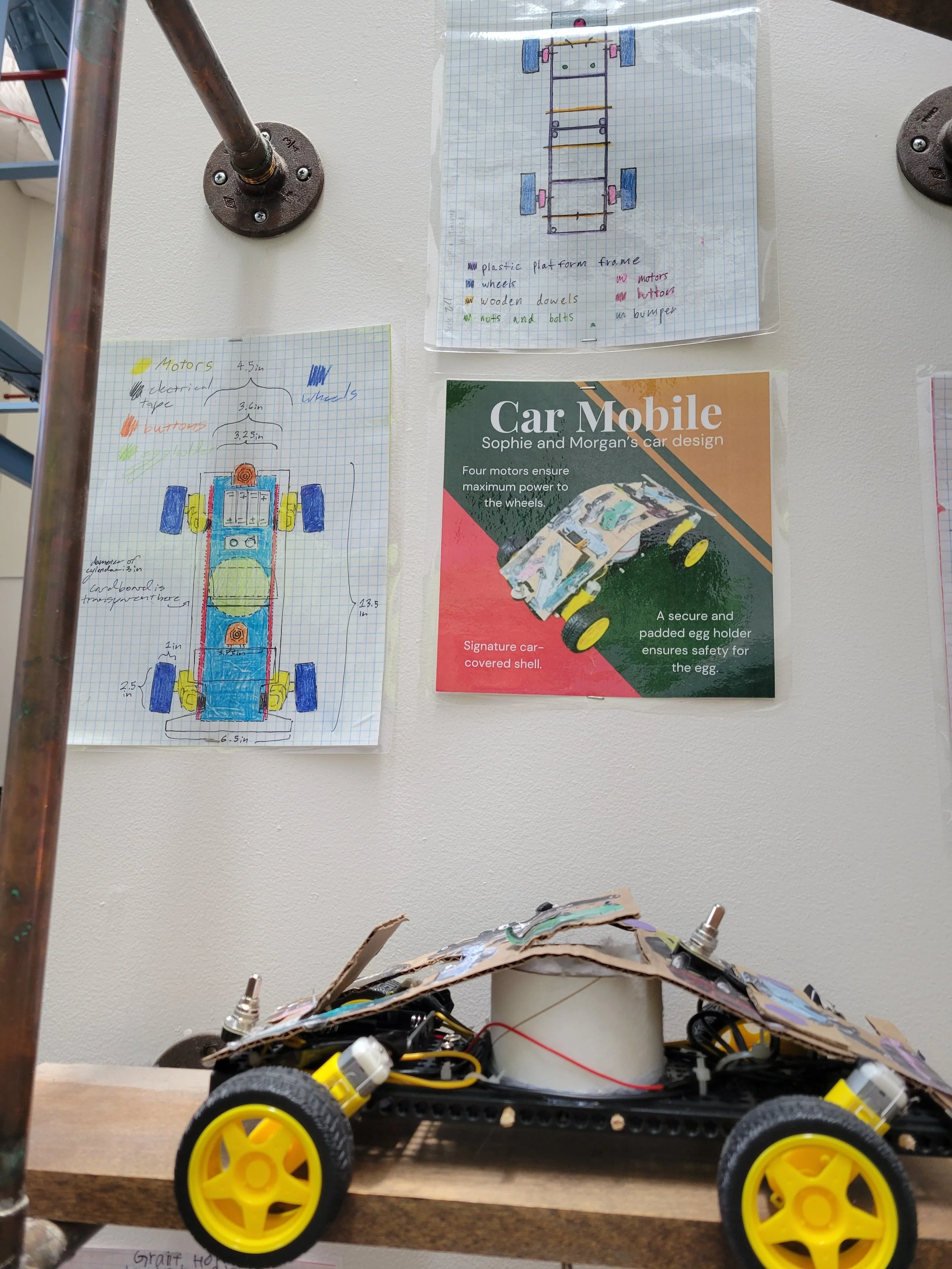
Over the course, students will keep track of their data, experiments, and notes in an engineering notebook, where they are encouraged to blueprint, model, and add their own creative flares. There are 3 major checkpoints since there are 3 iterations of vehicles students design. The first iteration is a push car where students explore questions of how mass, friction, and wind resistance influence factors of impact force. The second iteration has students explore variables of kinetic and potential energy, running experiments on which vehicle model has the greatest potential to store energy. The final iteration incorporates electric motors into their vehicles, where students learn how electricity and magnetism influence one another, and how to build their own circuits to power a vehicle.
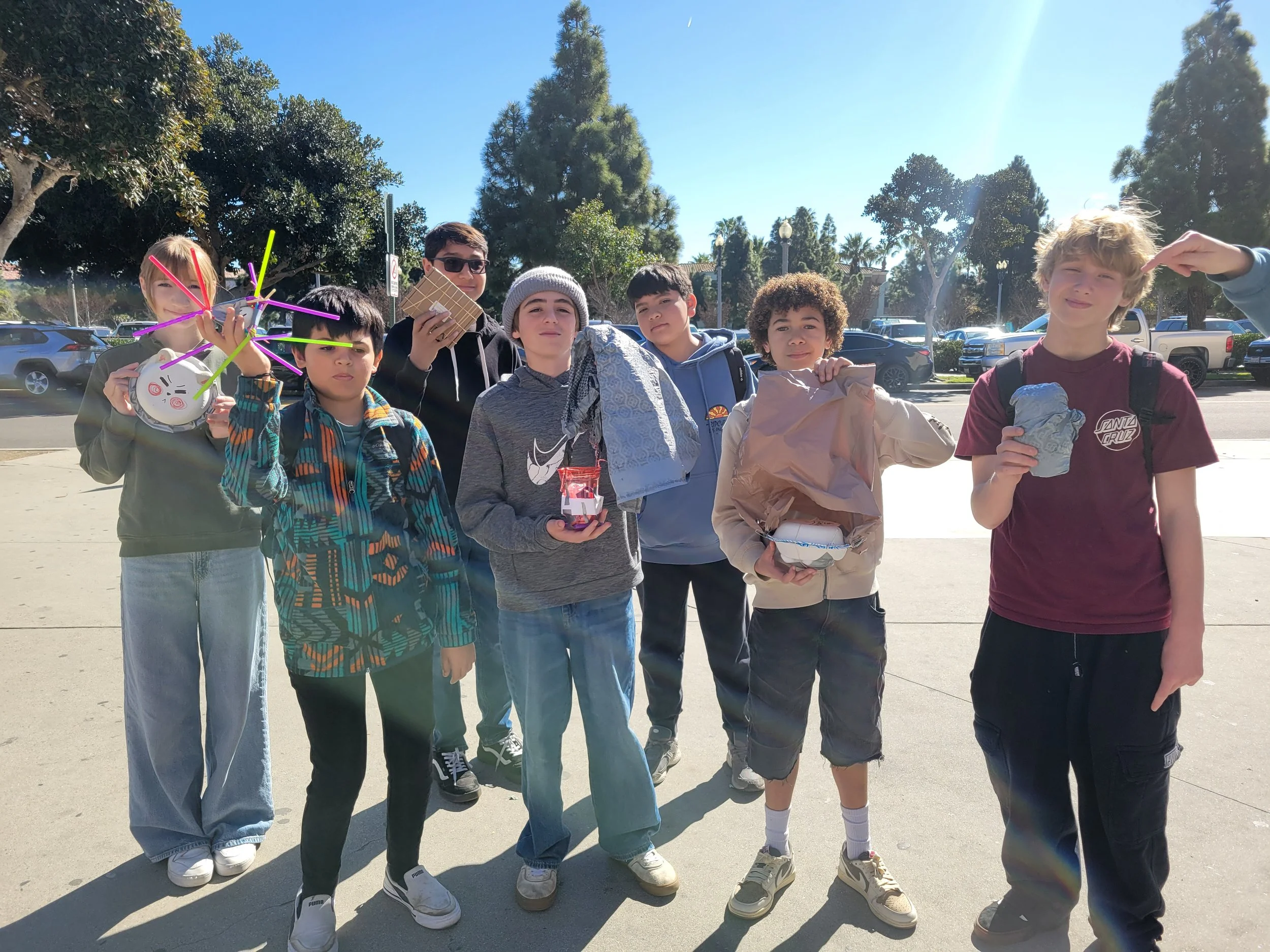
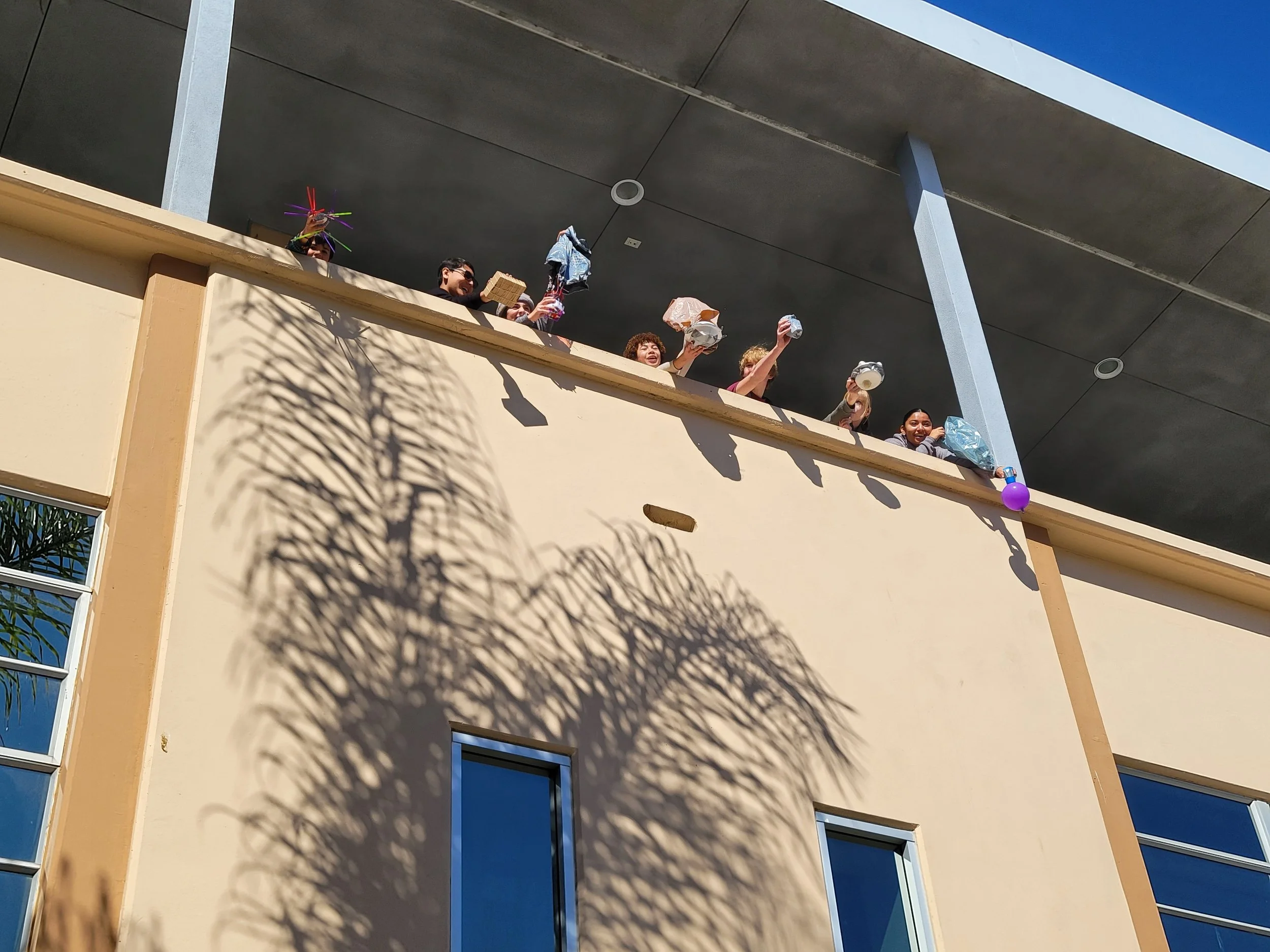
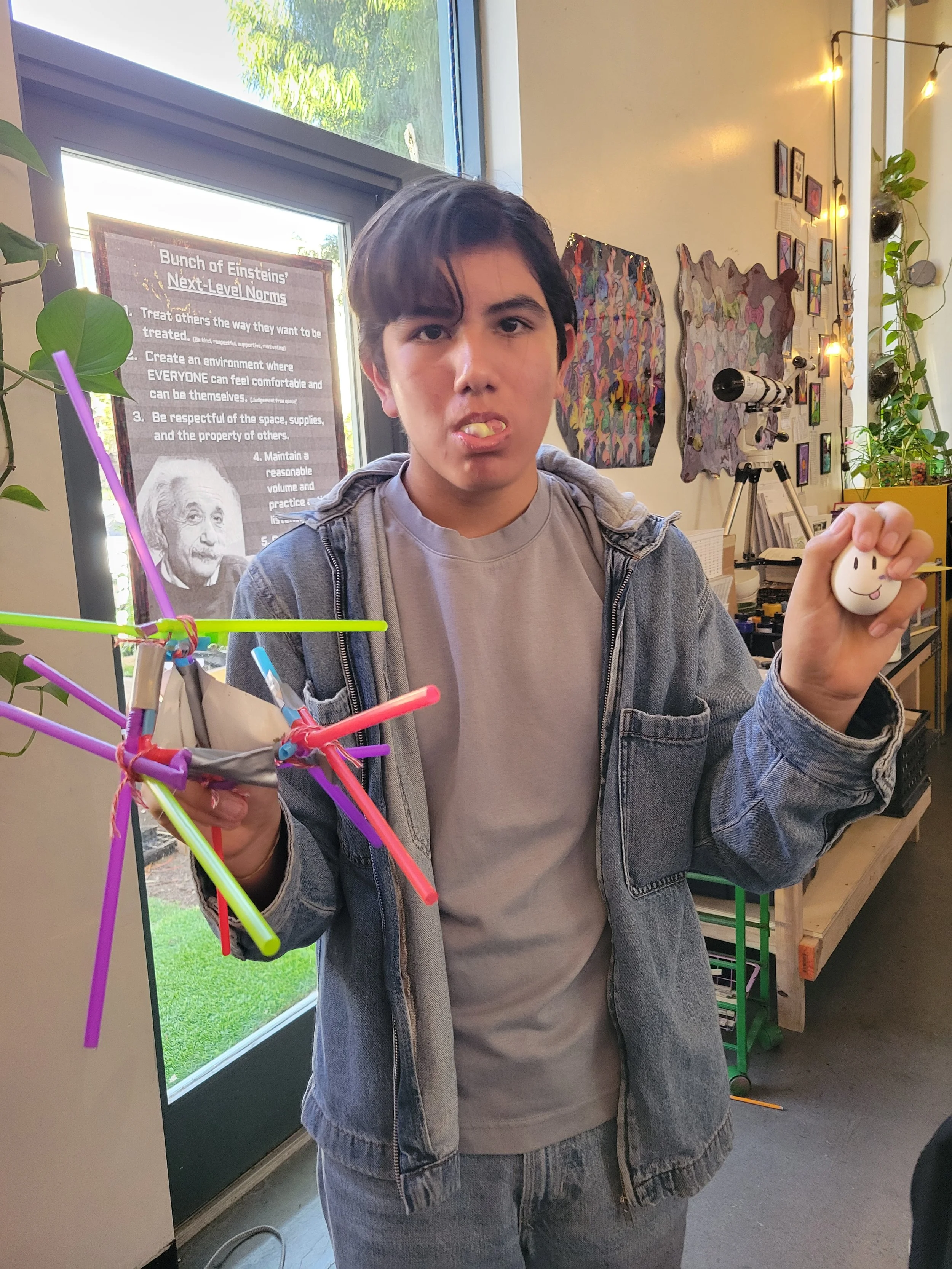
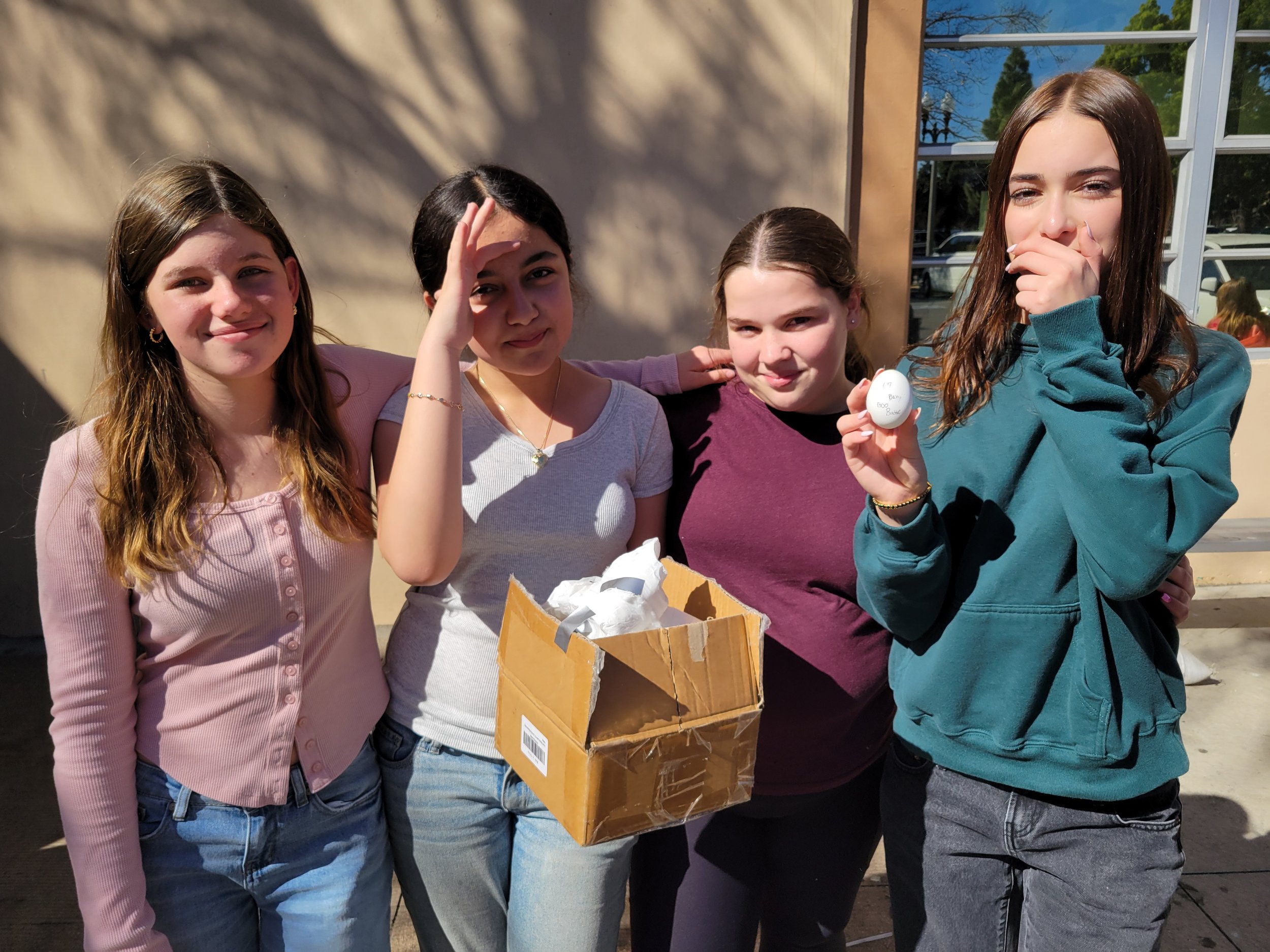
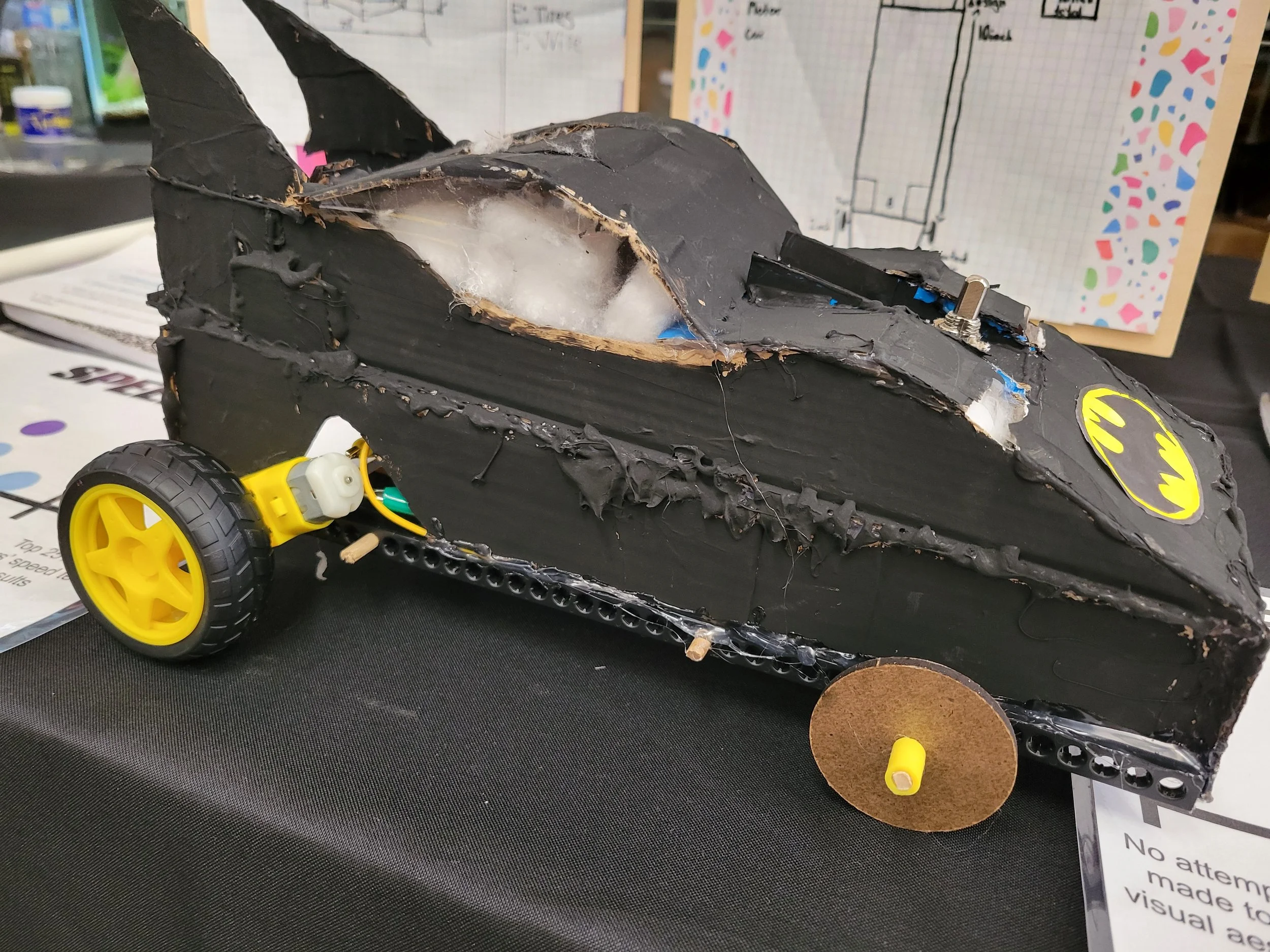
Finally all their work culminates into a crash test presentation. An egg will be placed in their vehicle to simulate a passenger, and ultimately crash into a wall to demonstrate how safe their design is. The final presentation also includes a blurb about why their vehicle was curated to consider safety, speed, and visual aesthetics.
Learning Goals
Students will explore the principles of kinetic and potential energy, Newton’s Laws, forces, momentum, electricity and magnetism through hands-on car design and testing of their vehicles. Throughout the project students will iterate through 3 different designs to test. Students will learn how to set up experiments and collect and interpret data, meanwhile building skills in engineering, communication, time management, and group collaboration.